5 Generations Deep: Black History, Bourbon & SoulFeast Week in Lexington, KY
Returning to a state my family has called home for five generations felt different this time in comparison to returning to Kentucky for family reunions, celebrations of life, and holiday gatherings. At African Cemetery No. 2 in Lexington — one of the oldest Black-owned and operated cemeteries in Kentucky — I found the graves of not one, but five of my ancestors. Out of more than 5,000 burials there, fewer than 600 are even marked. Finding five, by name, made this trip deeply personal.
That same trip, I learned about Charles Henry Parrish Sr., who was born into slavery in Lexington to a deacon father and a seamstress mother. He went on to become a minister, educator, and civil rights leader, eventually serving as president of Simmons College in Louisville. He and his wife introduced Madam C.J. Walker to Booker T. Washington — a small but telling detail about how connected and influential Black Lexington and Louisville really were.
My visit happened during SoulFeast Week, the city's annual celebration of Black culinary culture now in its sixth year. The festival highlights Black chefs, farmers, and restaurants while honoring the history, struggle, and achievements of the people who built this. It's the perfect entry point into everything this guide covers.
In this post, we'll discuss where to find the best Black-owned restaurants and businesses in Lexington, a quick history of Kentucky bourbon (and the science behind what makes it bourbon), where to stay, and the can't-miss points of interest for your own trip.
VisitLex hosted this trip, but the commentary in this post is my own.
What I found at the African Cemetery No. 2
Before this trip, I learned about the African American Heritage Trail, which includes a stop at African Cemetery No. 2. Many of my paternal relatives migrated from Kentucky to Cincinnati — according to the 1900 census, more than 50% of the Black female population in Cincinnati had come from Kentucky. This trend continued well into the 1920s.
The cemetery, officially chartered as the Colored Peoples Union Benevolent Society No. 2, is the final resting place of several notable figures in Kentucky's horse racing history, including jockeys Isaac Burns Murphy, Oliver Lewis, and James "Soup" Perkins, and trainer Abraham Perry. The land was purchased in 1869 and chartered the following year. The cemetery later fell into disrepair before the city took control in 1973, with burials continuing until 1976. Of more than 5,000 recorded burials, only about 600 markers remain recognizable today. In 2004, African Cemetery No. 2 was added to the National Register of Historic Places, and it's also home to the longest-running Juneteenth celebration in Lexington.
Here, I found the resting place of five relatives, all on my paternal side:
Parrish, Harriet — July 22, 1879
Parrish, Hiram — March 11, 1877
Parrish, Howard — April 22, 1883
Parrish, (J)eanette — April 10, 1916
Parrish, Rosa — June 3, 1880
Piersall, Araminta — January 8, 1829 – December 16, 1899
I didn't know it at the time, but those names would lead me somewhere I never expected. Harriet and Hiram Parrish weren't just relatives — they were the parents of Charles Henry Parrish Sr., a man whose life would take him from the place where he was born enslaved to the presidency of a college, and into rooms with some of the most influential Black leaders in American history. To see the full list of those who rest at African Cemetery No. 2, click here.
Census Source: Notable Kentucky African American Database
Charles Henry Parrish Sr.: From Enslavement to Civil Rights Leader
I didn't realize it while I was standing at that grave, but Harriet and Hiram Parrish weren't just my relatives. They were the parents of Charles Henry Parrish Sr., a man born enslaved in Lexington in 1859. He would go on to become a minister, educator, and civil rights leader. Eventually, he served as president of Simmons College in Louisville. Along the way, he and his wife introduced Booker T. Washington and prominent Black figures such as Madam C.J. Walker.
That's the challenge of tracing your lineage as a Black American. Much of our history has been erased, scattered, or never documented in the first place. Finding a grave is sometimes the only proof that someone existed at all. Yet, every so often, you discover more than just a name on a stone. You learn that your family was involved in significant events that shaped ideas and built something meaningful.
I didn't travel to Lexington looking for a civil rights leader in my family tree; I wanted to see where my ancestors came from. I serve as the unofficial genologist for my family, and it turns out Lexington was EXACTLY where I needed to be to learn more.
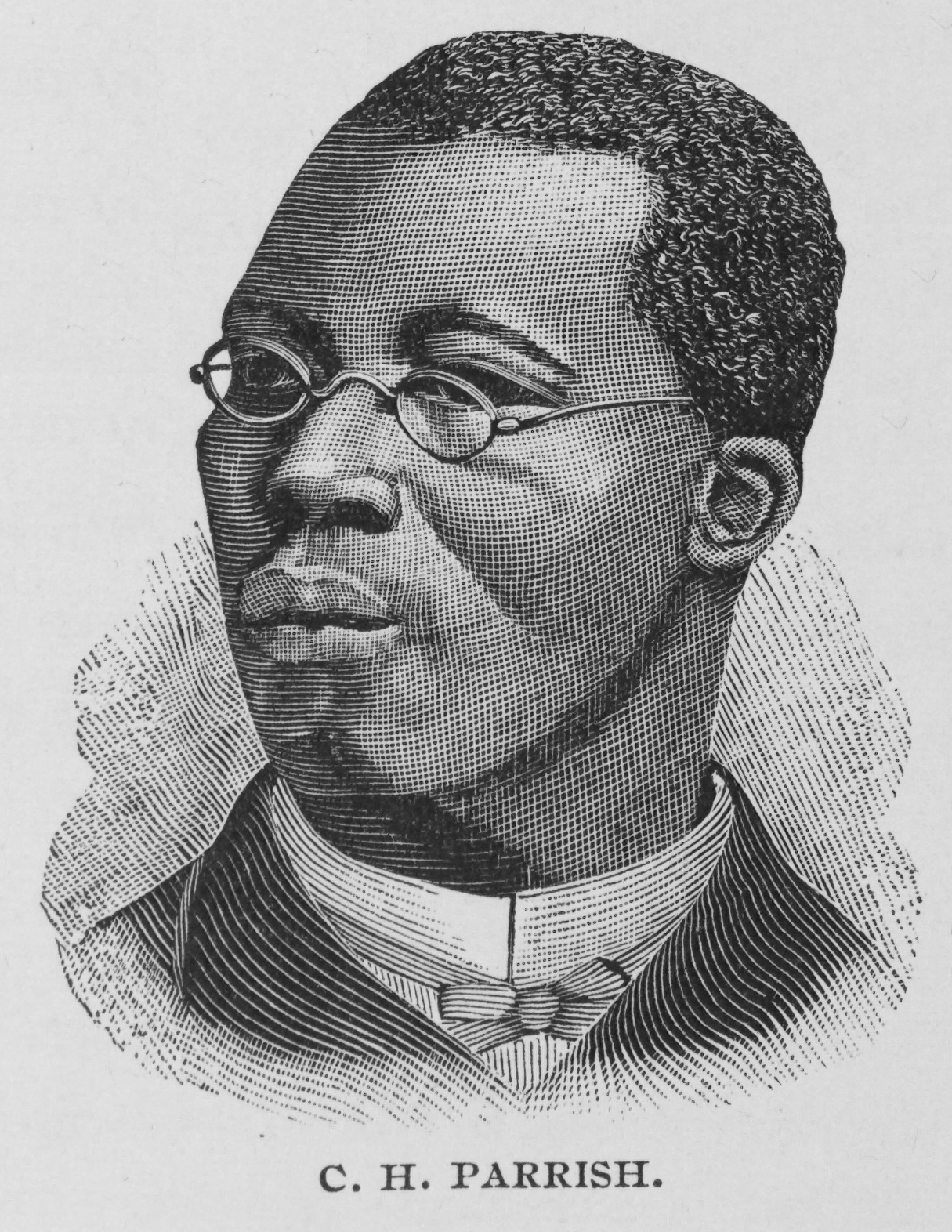
Photo Credit: Simmons, William J. - Simmons, William J., and Henry McNeal Turner. Men of Mark: Eminent, Progressive and Rising. GM Rewell & Company, 1887. p1056-1057
SoulFeast Week: Lexington's Celebration of Black Culture & Cuisine
SoulFeast Week is now in its sixth year, created by Lexington natives and siblings Martina and Marcellus Barksdale. Built around the Juneteenth holiday, it's a multi-day celebration of Black culinary culture, community, and history, with events that include:
A Gospel Brunch featuring James Beard Award semi-finalist Chef Isaiah Screech
A historical marker dedication honoring Robert Charles O'Hara Benjamin, a Black journalist and civil rights activist, who was killed in Lexington in 1900 for defending Black voting rights
Cocktails & Cigars, a late-night event blending premium cigars, handcrafted drinks, and local food trucks
SoulTeenth Fest, a free, family-friendly Juneteenth celebration with live music, cooking demos, and local vendors
Menus were built around ingredients sourced through SoulFeast Week's partnership with Black Soil KY, an organization working to reconnect Black Kentuckians to their heritage in agriculture
SoulFeast Week serves as the anchor for Kentucky Black Restaurant Week, which kicks off right after and runs through the following week, spotlighting Black-owned restaurants.
Black-Owned Businesses to Visit in Lexington
Sassy Bleu
496 E High St, Lexington, KY 40508
Come for the soul food, stay because you can't stop ordering. Sassy Bleu is chef Sabrina Booker's gourmet soul food spot, run alongside her brother Herbie, and the menu backs up the name. Get the catfish. Get the collard greens, simmered with turkey for that deep, slow-cooked flavor, don’t even reach for the salt or pepper. And save room for the yellow cake, because you're going to want it even after they roll you out the door.
The V at the Vine
106 W Vine St, Lexington, KY 40507
V at The Vine is Lexington's newest fine dining destination, perched on the ninth floor downtown with sweeping skyline views with a beautiful U-shaped bar. Chef Cole Arimes, a Lexington native, leads the kitchen with a coastal-inspired, seafood-forward menu built on the freshest catches and local ingredients. It's upscale, it's polished, and the view alone is worth the reservation.
Black Soil
820 Lane Allen Road, Suite 176, Lexington, KY 40504, and 760 Florence Avenue, Lexington, KY 40508
Black Soil KY is doing more than supplying ingredients for SoulFeast Week. Founded by Lexington native Ashley C. Smith and co-founder Trevor Claiborn, the organization works to reconnect Black Kentuckians with their agricultural heritage. Today, that mission runs through two Neighborhood Farmacy Market locations in Lexington, on Lane Allen Road and Florence Avenue, bringing fresh, locally grown food into communities that have long gone without easy access to it. Prices stay affordable by design, and their "Grow It Forward" program lets shoppers facing hardship apply community-donated funds toward their grocery bill.
Silver Spring Farm Eqwine & Vineyard
3710 Leestown Rd, Lexington, KY 40511
This place is the definition of Black excellence. Silver Springs Farm is a Black-owned winery and distillery in Lexington, Kentucky, run by husband-and-wife duo Allen and Leslie Carter, University of Kentucky alums and college sweethearts who turned a piece of forgotten land into something extraordinary. Their wine has the hardware to back it up, too: a double gold medal at the Kentucky Commissioner's Cup for their Black Type Reserve Sparkling Wine, and a bronze for their White Traminette.
Private tastings are available by appointment, and the property sits on 20 acres rich in Kentucky distilling and Thoroughbred history. It's the original site of the historic Silver Springs Distillery, dating back to 1867. Allen and Leslie recently released a hand-bottled bourbon called Keeper's Heritage, named for Tucker, who was enslaved at the distillery and went on to become Kentucky's first and only enslaved gauger and storekeeper, a Treasury Department-appointed role overseeing quality and integrity at every stage of production. It's a story that Allen and Leslie learned themselves after purchasing the property, one they've chosen to carry forward rather than let it disappear.
Fresh Bourbon Distillery
377 E Main St ST. 100, Lexington, KY 40507
Fresh Bourbon is owned by husband-and-wife duo Tia and Sean Edwards, and in 2020, the Kentucky Senate recognized them for something history had been waiting on for over 150 years: Fresh Bourbon's Master Distiller is the first African American to produce bourbon in Kentucky since slavery.
Their bourbon carries notes of vanilla, brown sugar, oak smoke, and a bit of nuttiness. The tasting room sits in downtown Lexington's Distillery District, and it doesn't look like your typical bourbon stop: think chandeliers, gold accents, granite countertops, and a full bar with a mixology-driven tasting experience led by a knowledgeable staff. You'll leave with a new appreciation for bourbon and a better understanding of why Kentuckians take it so seriously.
The History of Bourbon (and the Science Behind It)
Bourbon has rules. To legally be called bourbon, it has to be made in the United States, distilled from a mash that's at least 51% corn, and aged in new, charred oak barrels. That's why every bourbon is technically a whiskey, but not every whiskey can call itself bourbon. Filing that one away for trivia night.
Lexington-based Bespoken Spirits is breaking from tradition in the best way with Sable Bourbon, the bourbon they created for the cast of The Best Man. Yes, that Best Man. Harold Perrineau, Malcolm D. Lee, Morris Chestnut, and Taye Diggs all had a hand in this one. I got to tour the spot and sit down for a tasting, and instead of waiting years in a barrel like tradition says you have to, Bespoken finishes the spirit with toasted oak staves using a proprietary process that gets you rich, complex flavor in a fraction of the time. Smart, fast, and still tastes like somebody knew what they were doing.
Where to Stay in Lexington
The Manchester
Every Saturday, year-round, from 8 a.m. to 1 p.m.
941 Manchester St, Lexington, KY 40508
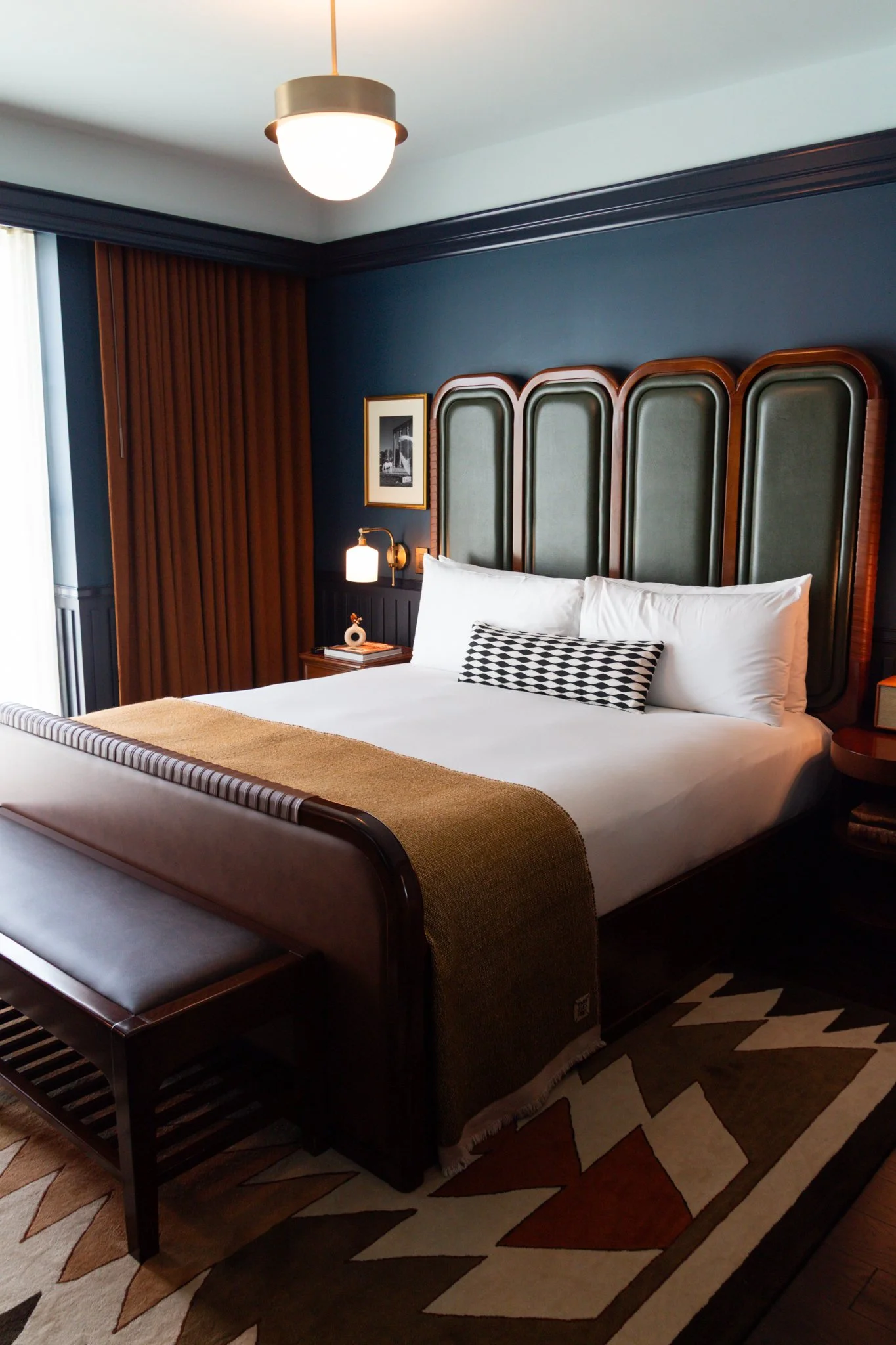
The Manchester is Lexington's newest luxury stay in the Distillery District, and in 2025, it earned a Michelin Key, only the second hotel in Kentucky to get one. That distinction matters: a Michelin Key is the hotel world's version of a Michelin star, awarded for design, service, and overall experience, with One Key meaning "a very special stay." Translation: this place is not playing.
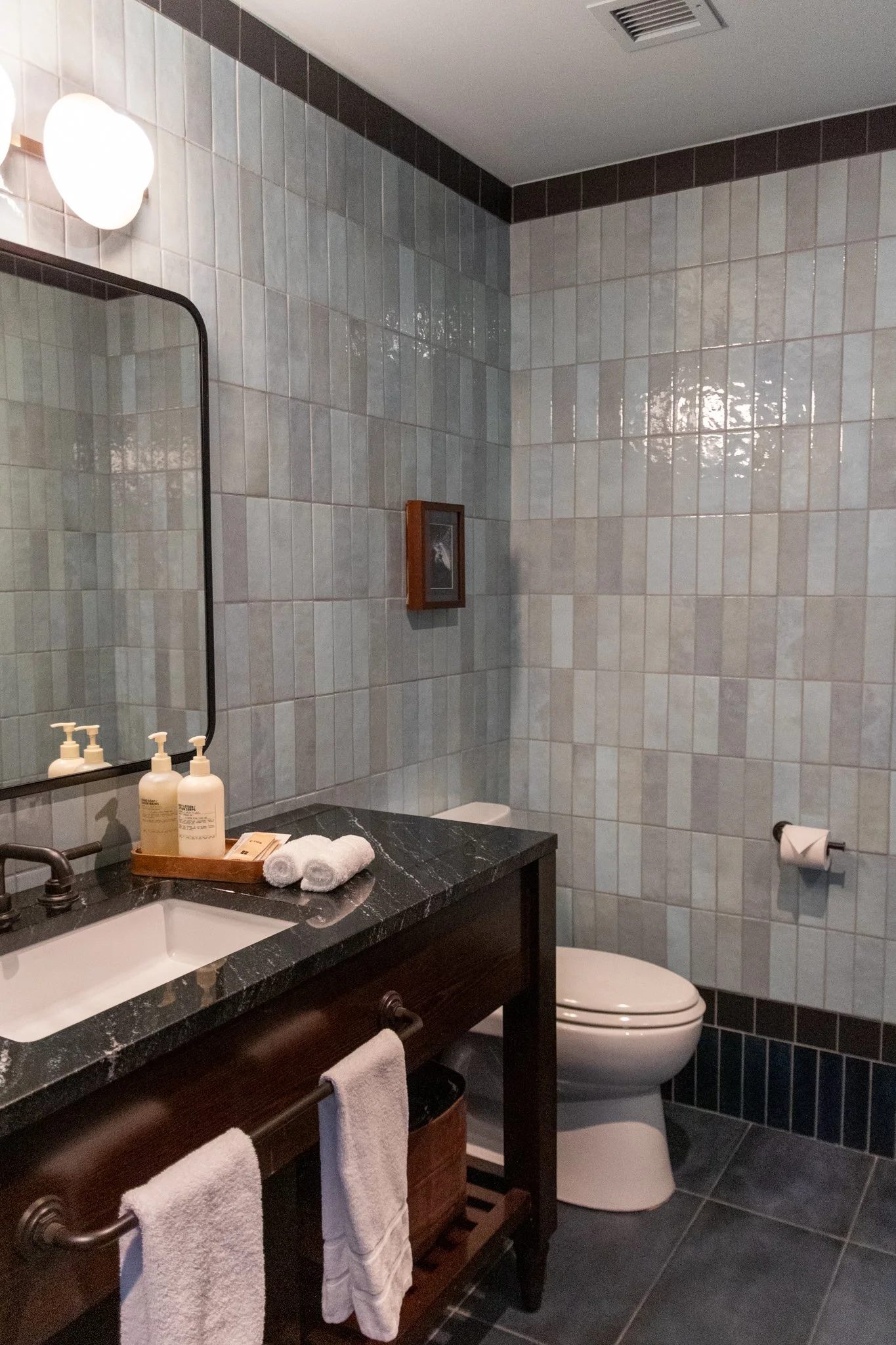
My room had me at the teal walls paired with rich wood accents everywhere, headboard, nightstands, bench, the whole vibe. Even the bathroom carried that same moody blue-gray through the tile. Nothing about it screamed generic hotel room. I am a luxury gal, and I like luxury things!
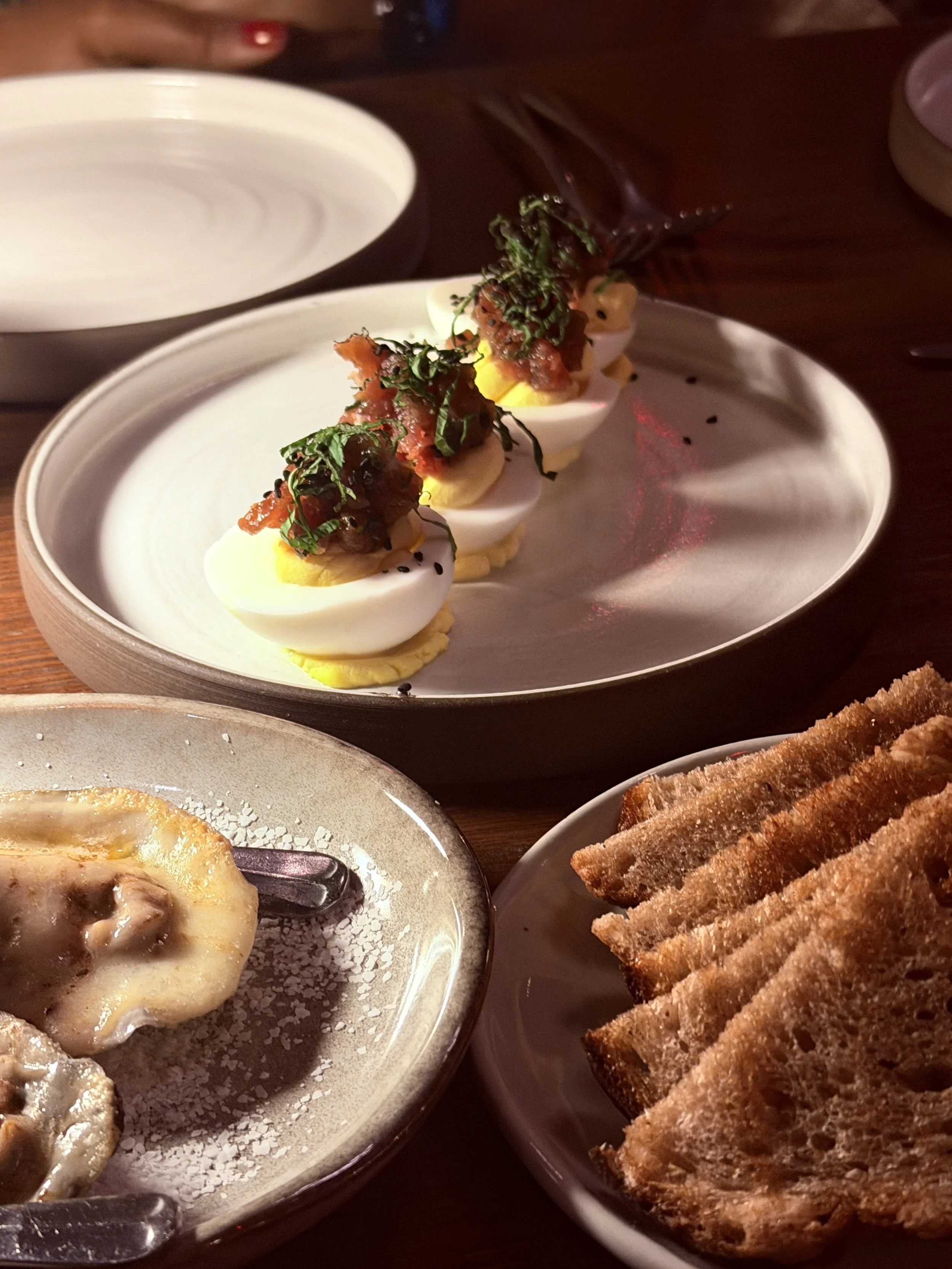
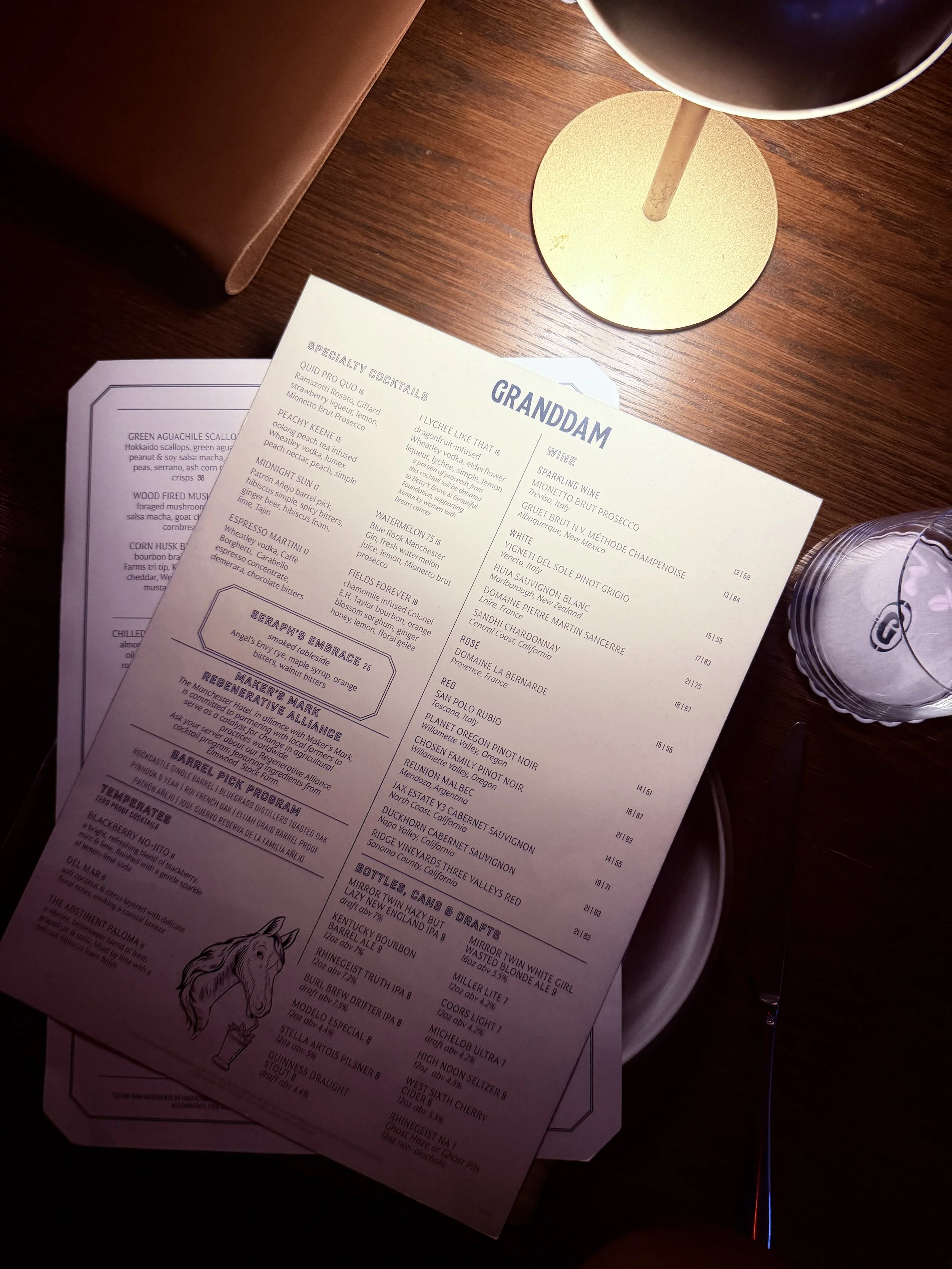
Downstairs is Granddam, the hotel's ground-floor restaurant, named after a matriarchal racehorse who's past her prime but still living her best life (wait, is that me? JK! ). Executive Chef Paula Endara, a Quito, Ecuador, native who recently competed on Bravo's Top Chef, leads the kitchen, reimagining Bluegrass fare sourced from local farms. Start with the deviled eggs, then order the Lamb Wellington and thank me later, it was a piece of art on the plate. Then head up to Lost Palm, the rooftop bar, for skyline views worth the trip alone.
For accessibility, The Manchester offers an ADA room option, a no-step entrance, accessible parking, and braille signage throughout.
Points of Interest & Things to Do
African American Heritage Tour
Before visiting African Cemetery No. 2, consider starting with the African American Heritage Trail, a self-guided tour of Lexington's historic neighborhoods: Northside, East End, Jefferson Street, and South Hill. This trail highlights over 250 years of Black history, showcasing figures such as emancipationists, educators, and musicians. It was created by Dr. Yvonne Giles, a local historian and honorary Doctor of Humane Letters from the University of Kentucky, known as "The Cemetery Lady." Plan to spend at least half a day on the trail, and bring comfortable shoes!
Keeneland
4201 Versailles Road, Lexington, Kentucky 40510
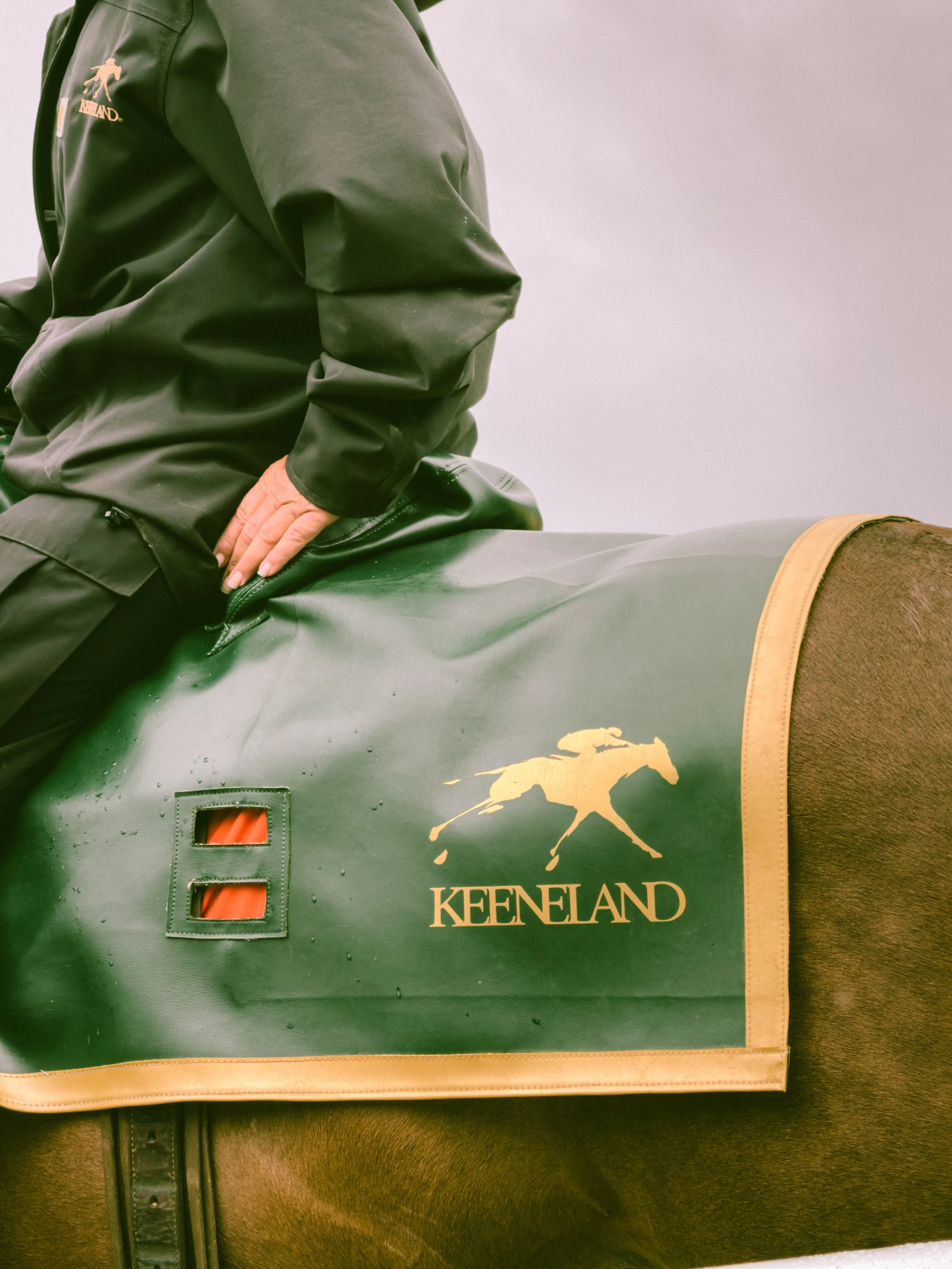
When visiting Lexington, you can't miss Keeneland. Founded in 1936, it is one of the most beautiful racetracks in the world and a national historic landmark. Live racing takes place in April and October, but the grounds are open to the public year-round. While you're there, be sure to visit the Keeneland Library—it's free and houses the world's largest collection of Thoroughbred racing history.
For accessibility, Keeneland provides ADA-designated parking, including van-accessible spaces in a free accessible lot. Complimentary golf cart shuttles are available to transport visitors to and from the entrance, and staff members in green jackets can assist with wheelchairs at the South Plaza.
The Lyric
300 E Third St, Lexington, KY 40508
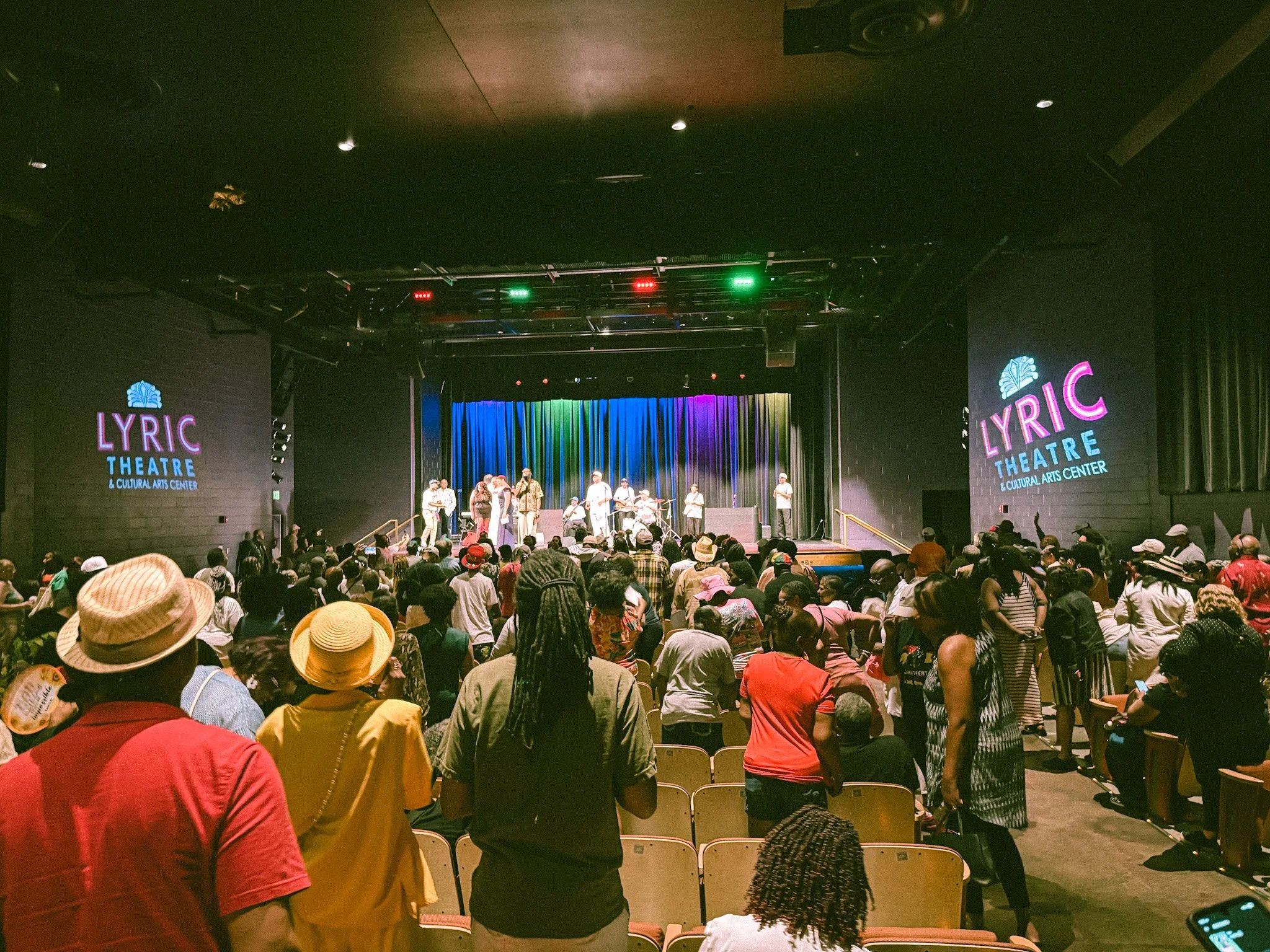
Opened in 1948 during segregation, the Lyric was the heartbeat of Lexington's Black culture and a stop on the Chitlin' Circuit. It hosted legendary artists such as James Brown, B.B. King, Ray Charles, and Count Basie. The venue closed in 1963 and remained dormant for nearly 50 years before reopening in 2010 as a 540-seat theater, an African American cultural museum, and a rotating art gallery. To understand the resilience of this community throughout some of the most challenging decades in the city's history, start your journey here. During my time in Lexington I attended their Juneteenth festival which was an all ages event
Wheelchair-accessible seating is available; please call ahead to reserve.
If you are planning to visit Lexington, I also recommend reviewing the VisitLex site, as their team keeps the site updated for upcoming events and seasons. Thank you Lexington for showing me a good time!
Have you visited Lexington? Have questions? Drop a comment.
MORE TRAVEL BLOGS